Critical approaches to knowledge production with children: A Summer School of collective inquiry and practice
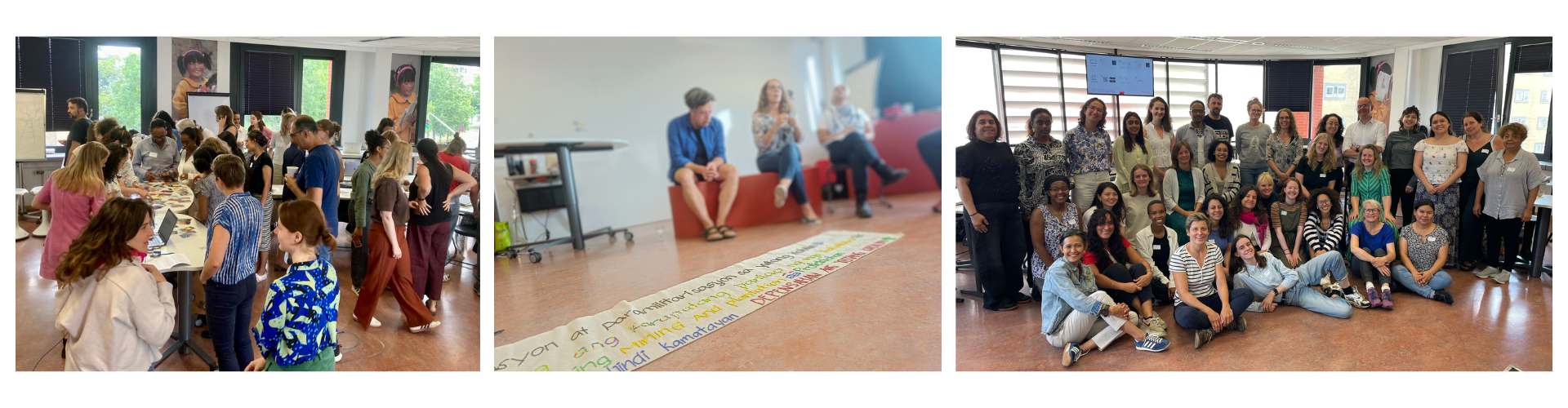
From 24 to 27 June 2025, the Faculty of Psychology and Educational Sciences at Ghent University hosted the Summer School Critical approaches to knowledge production with children through narrative, co-creative and/or arts-based research, bringing together doctoral researchers, postdoctoral scholars and members of the K-Reporters network for four intensive days of learning, exchange and collective reflection.
Organised within Work Package 3 (Ethnography and Arts-Based Educational Research) of the K-Reporters project, the Summer School created a shared space to critically explore methodologies that position children as co-researchers and challenge adult-centred, universalist and colonial approaches to research in childhood studies.
Day 1 – Setting the Ground: Ethics, Participation and Positionality
The Summer School opened with a welcome from the organising team, who introduced the aims of the programme and its connection to the broader objectives of K-Reporters and WP3.
In the session Practices of Research, PhD researchers Sara Lembrechts, Laura Segarra and Eveline Meylemans shared methodological reflections from participatory and co-creative research projects with children, raising critical questions around care, power relations and ethical responsibility in research practice.
This was followed by an Expert Dialogue with Kay Tisdall (University of Edinburgh) and Elisabeth De Schauwer (Ghent University), moderated by Lieselot De Wilde, focusing on how participation, ethics and knowledge production can be critically rethought within childhood research.
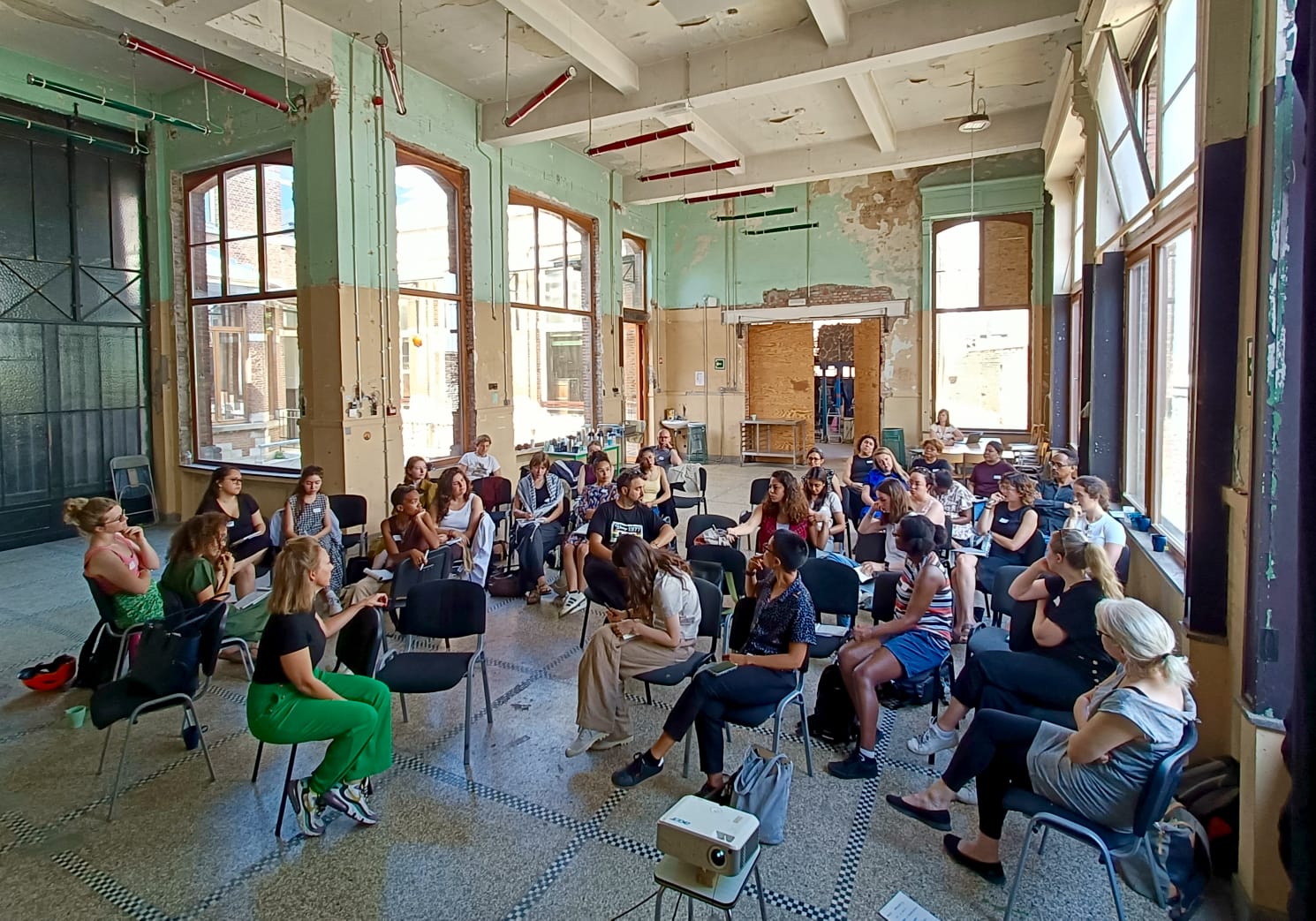
The day concluded with Opening Circles, informal small-group conversations in which participants shared their research trajectories, positionalities and expectations for the week, laying the foundations for trust, dialogue and collective engagement.
Day 2 – Art, Co-creation and Participation Beyond the Classroom
The second day took participants to Brussels, where the Summer School explored the intersection of art, participation and research through visits to two inspiring initiatives.
At Zinneke, participants learned about a participatory artistic model that culminates in the Zinneke Parade, a collective carnival bringing together communities, disciplines and generations through shared imagination and creative practice.
The visit to ABC House (Art Basics for Children) offered an immersive experience of arts-based pedagogy centred on play, aesthetics and co-creation. Through an interactive workshop, participants reflected on how materials, space and atmosphere can open new ways of engaging with children in research and educational contexts.
Throughout the day, discussions focused on the possibilities and tensions of participatory research: what it means to truly reimagine research with children, and what kinds of spaces, tools and relationships are needed to support this shift.
Day 3 – Decolonial, Embodied and Collaborative Research Practices
The third day was dedicated to critical engagements with decolonial and postcolonial perspectives in research. Members of the Decolonising Education and Research on Migration (DERM) network—including Sonia Romero, Juan Carlos Ruiz, Blanca Cordero, Ilse Derluyn and Giacomo Orsini—shared their work with migrant communities, marginalised groups and children, reflecting on researcher positionality and the challenges of integrating decolonial perspectives into empirical research.
Through collective research experiences involving visual methods and cartographies, participants experimented with relational, embodied and multimodal approaches to knowledge production, exchanging strategies for conducting ethical and collaborative research in complex contexts.
The day closed with a session led by Arjang Omrani (Ghent University), who presented his work in visual and shared anthropology, prompting reflections on fieldwork, participation, multimodality and the transformative potential of visual languages in research.
Day 4 – Arts-Based Methodologies and Collective Futures
The final day brought the Summer School to a close with a session on Practices of Research: Arts-Based Methodologies in Motion, featuring contributions from Clod Yambao, Joanna Empain and Simon Allemeersch. Their work highlighted how artistic practices at the intersection of art, academia, co-creation and activism can open new ways of sensing, relating and producing knowledge.
In the Closing Circles, participants reflected collectively on their experiences, shared key insights from the week and discussed possibilities for future collaborations. This moment of closure also served as a space to consolidate relationships and envision how the methodologies explored might travel into participants’ own research contexts.
A Collective Experience
Over four intense days, the Summer School offered a vibrant space for critical reflection, methodological experimentation and interdisciplinary dialogue, reinforcing the importance of narrative, co-creative and arts-based approaches as both methodological choices and ethical commitments.
The organising team warmly thanks all participants for their engagement and generosity, and the K-Reporters team at Ghent University for making this Summer School possible. The conversations, practices and connections forged during this week will continue to resonate within ongoing research and collaborative work across contexts.